
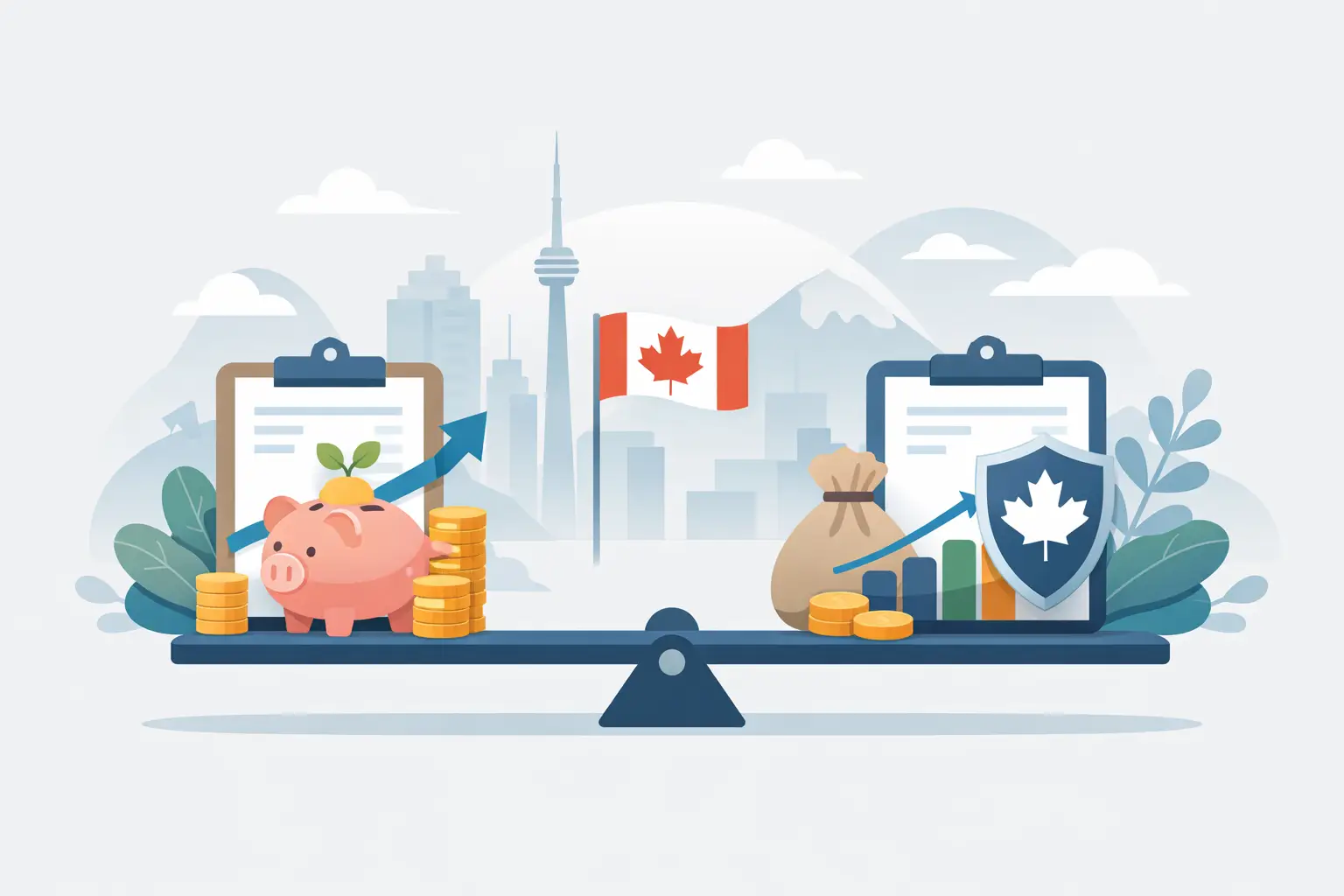
If you are trying to save for the future and keep hearing about tfsa vs rrsp for beginners, you are not alone. For many Canadians, these are the first two accounts that come up when the conversation turns to taxes, investing, or retirement. They can both help you grow money, but they do it in very different ways.
That difference matters more than most people realize. Choosing the wrong account is not usually a disaster, but choosing the right one for your income, goals, and timeline can make saving feel easier and more rewarding. For beginners, the best place to start is not with which account is better in general. It is with what each account is built to do.
TFSA vs RRSP for beginners: the core difference
A Tax-Free Savings Account, or TFSA, lets your money grow tax-free. You contribute with after-tax dollars, which means you do not get a tax deduction when you put money in. The advantage comes later. Investment growth, interest, dividends, and withdrawals are generally tax-free.
A Registered Retirement Savings Plan, or RRSP, works the opposite way. Contributions can reduce your taxable income today, which may lower your tax bill. But when you withdraw money later, those withdrawals are usually taxed as income.
That is the real starting point in the tfsa vs rrsp for beginners conversation. One account gives you tax relief now. The other gives you tax relief later.
What a TFSA is best for
The TFSA is often the more flexible choice, especially for people who are still building their financial foundation. You can use it for short-term savings, medium-term goals, or long-term investing. That makes it useful for an emergency fund, a future car purchase, a down payment strategy, or retirement savings.
Another reason beginners often like the TFSA is simple access. If you need the money, you can usually withdraw it without creating a tax bill. That can bring peace of mind when your income is still growing or your life is still changing.
There is also a useful feature many people miss. When you withdraw from a TFSA, the amount you took out is added back to your contribution room in a future calendar year. In practical terms, that means a TFSA can be more forgiving if your plan changes.
For students, newcomers, younger workers, and families building cash reserves, that flexibility can matter just as much as tax savings.
What an RRSP is best for
The RRSP was designed with retirement in mind. Its biggest advantage is the upfront tax deduction. If you earn a solid income, contributing to an RRSP can reduce the taxes you owe now. That can be especially valuable if you are in a higher tax bracket today than you expect to be in retirement.
For example, if your income is strong and every extra dollar is taxed at a higher rate, an RRSP contribution may create meaningful tax savings. Some people even use their tax refund to reinvest, which can help accelerate long-term growth.
The trade-off is access. RRSP withdrawals are usually taxable, and taking money out early can come with withholding tax and a permanent loss of contribution room. In other words, the RRSP rewards long-term discipline, but it is less forgiving if you need the money before retirement.
That does not mean it is only for older Canadians. It can still be a strong option for working professionals, business owners, and dual-income households who want to reduce taxable income while building retirement savings.
How taxes shape the decision
If you remember one thing, remember this: the better account often depends on your tax rate now versus your tax rate later.
If your income is modest today and likely to rise over time, a TFSA often makes more sense first. You are not giving up a big tax deduction because your current tax rate may already be relatively low. You also preserve RRSP room for later, when that deduction could be more valuable.
If your income is higher today and you expect to be in a lower tax bracket in retirement, the RRSP can be more attractive. You get a stronger deduction now and may pay less tax when withdrawing later.
This is why there is no universal winner. Two people can have the same savings goal and still make different choices because their incomes, family needs, and future plans are not the same.
When the TFSA usually comes first
For many beginners, the TFSA is the cleaner first step. That is especially true if you are still paying down debt, building emergency savings, or unsure when you might need access to your money.
A TFSA often makes sense first if you are early in your career, have variable income, expect your salary to increase over time, or want to save for multiple goals at once. It is also a strong option if you want investment growth without worrying about tax on future withdrawals.
There is another practical reason. Some income-tested government benefits can be affected by taxable income in retirement. Because TFSA withdrawals are generally not taxable, they may have less impact in those situations than RRSP withdrawals.
That detail can matter for lower- and middle-income savers who want flexibility later.
When the RRSP usually comes first
The RRSP often moves higher on the priority list once income rises. If you are in a strong earning phase, the tax deduction may be too valuable to ignore.
It can also be useful for people with a structured retirement plan who are comfortable locking money away for the long term. If your budget is stable, your emergency fund is already in place, and your main goal is retirement savings, the RRSP becomes much more compelling.
Some Canadians also use RRSPs because of programs such as the Home Buyers’ Plan or the Lifelong Learning Plan. These programs can allow qualifying withdrawals under specific rules, though they come with repayment requirements and should be understood carefully before use.
Can you use both?
Yes, and many people eventually should.
The TFSA and RRSP are not rivals in the way they are sometimes presented. They are different tools. One gives flexibility and tax-free withdrawals. The other gives a current tax deduction and retirement focus.
A common path is to start with a TFSA when income is lower and flexibility matters more, then add RRSP contributions as income grows. Another approach is to split contributions between both accounts to balance current tax savings with future tax-free access.
This kind of blended strategy can work well for families and professionals managing multiple goals at once, such as retirement, education costs, and home ownership.
Common beginner mistakes to avoid
One of the biggest mistakes is opening an account without understanding contribution limits. Both TFSAs and RRSPs have rules, and overcontributing can lead to penalties.
Another common mistake is treating the account itself like the investment. A TFSA or RRSP is just the account type. Inside it, you still need to choose how the money is held, whether that is cash, GICs, mutual funds, ETFs, or other investments.
Beginners also sometimes focus too much on the tax break and not enough on liquidity. An RRSP refund can feel rewarding, but if you need that money back in six months, the TFSA may have been the better fit.
Finally, some people wait because they think they need to choose perfectly. You do not. Starting with a sensible option and adjusting as your income and goals change is often better than delaying for years.
A simple way to decide
If you want a straightforward rule of thumb, start here. If your income is lower, your goals are mixed, or you may need access to your savings, lean toward the TFSA. If your income is higher, your retirement focus is clear, and you want to reduce taxable income now, lean toward the RRSP.
If you still feel stuck, that is normal. Financial decisions are rarely just about math. They are also about family needs, job stability, debt, future plans, and how much flexibility helps you feel secure. That is why many Canadians benefit from personalized guidance before making a long-term savings decision.
At Unity Financial Services, the goal is to make these choices easier to understand so individuals and families can move forward with confidence, not confusion.
The best account is the one that fits your life today while still supporting the future you are building.