

Tuition tax credits apply when eligible fees exceed $100 at a qualifying post-secondary institution, reducing your federal income tax by multiplying eligible tuition by the lowest federal rate. Claiming these tax credits for students correctly on your personal return can be confusing. Book a consultation with Unity Financial Services to get your tax filing done accurately.
Canadian post-secondary students claim eligible tuition fees paid to certified institutions as a non-refundable federal tax credit, reducing income tax owed. The federal education and textbook amounts were eliminated in a previous tax year, though some provinces retain similar credits. Unity Financial Services helps students and parents across Canada, including Québec filers, prepare accurate CRA and Revenu Québec returns claiming these amounts correctly.
Key Takeaways
- Canada’s tuition tax credit applies to post-secondary education costs of $100 or more annually.
- Eligible students multiply tuition paid by the lowest federal tax rate to calculate credit amount.
- Students aged 16+ developing occupational skills at certified institutions qualify for the tuition tax credit.
- Unused tuition credits carry forward to future years or transfer to eligible family members.
What Is the Tuition Tax Credit and Who Qualifies?
A non-refundable tax credit for post-secondary students, the tuition tax credit lowers the amount of income tax owed rather than issuing a cash payment. Post-secondary students across Canada, from British Columbia to Newfoundland and Labrador, can use it to shrink their tax bill each year. Losing sight of this credit means paying more tax than necessary on money already spent on tuition.
Qualifying isn’t complicated, but a few conditions matter.
Who Qualifies for the Tuition Tax Credit?
Eligible tuition fees generally need to exceed $100 in the tax year. The fees must be paid to a post-secondary institution located in Canada, or, for deemed residents, to a qualifying institution outside the country under certain conditions. That covers most college and university students, along with many trade and apprenticeship programs.
Does the School Need CRA Approval?
Yes. The institution generally must be approved by the Canada Revenue Agency for its fees to count toward the credit. Students enrolled at a recognized Canadian college or university rarely run into trouble here.
A few other costs also count toward education tax amounts:
- Tuition paid directly to the institution
- Professional admission and examination fees, even when paid to a professional association or a government department
- Fees tied to recognized certification or licensing exams
Parents helping cover these costs should keep every receipt organized before tax season arrives.
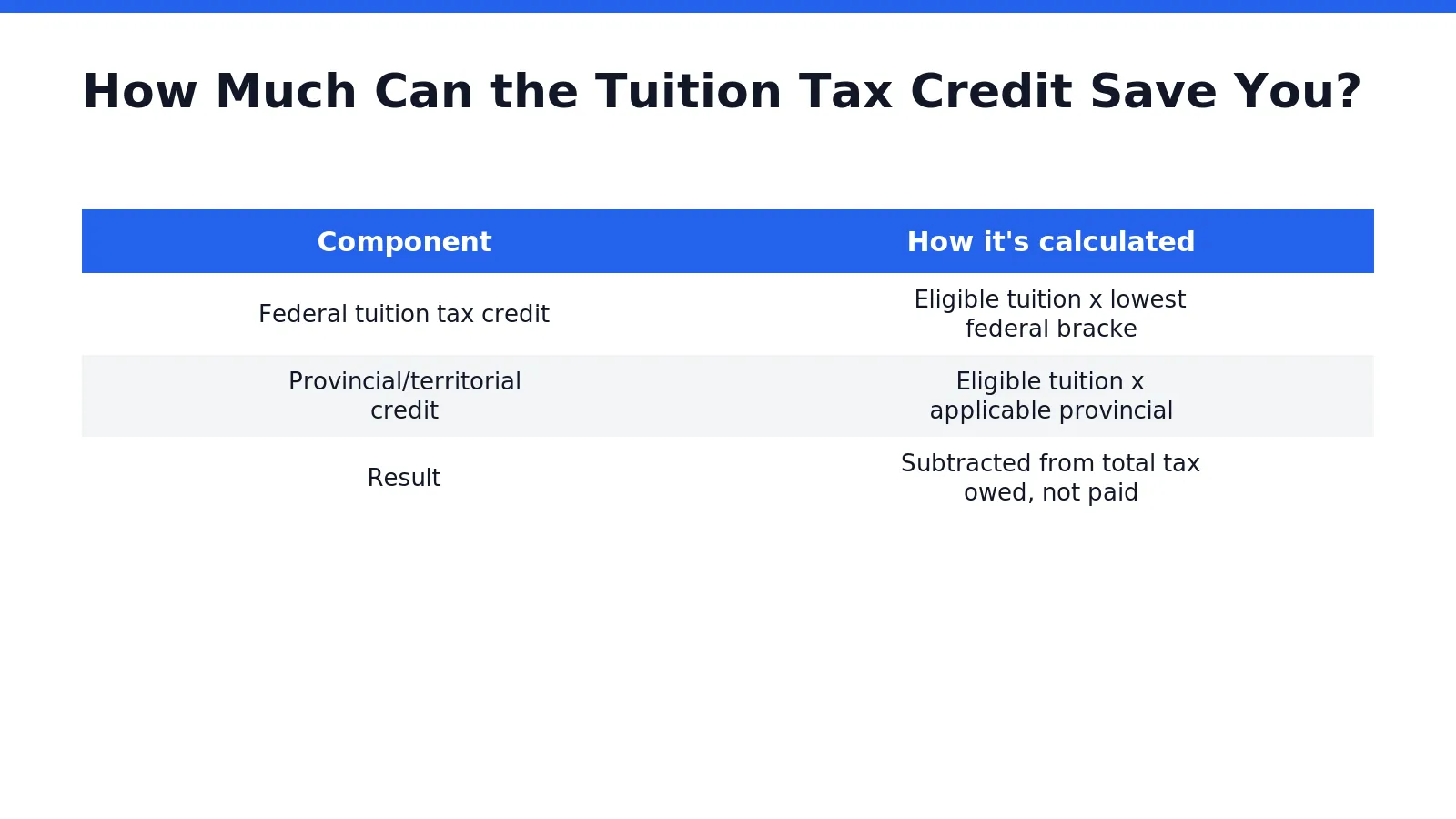
How Much Can the Tuition Tax Credit Save You?
Savings depend on eligible tuition fees paid, multiplied by a set federal rate. The federal calculation uses the lowest federal tax bracket rate, which is currently 14%. A student who paid $5,000 in eligible tuition during the current tax year could see a federal credit of $700 applied against taxes owed.
That credit does not arrive as a check in the mail. Instead, it works like a discount subtracted directly from the total tax bill. Lower tax owed, more money staying in a student’s or graduate’s pocket at filing time.
Does the Provincial Tuition Credit Add to the Federal Amount?
Yes, in many cases. Some provinces and territories offer their own tuition tax credit on top of the federal one, calculated using a similar method with a provincial rate instead. Students in these provinces should check both credits, since combined savings can be higher than the federal amount alone.
Here is how the pieces fit together:
Unity Financial Services helps clients across Canada work through both layers during personal tax preparation, so nothing gets missed at filing time.

How Do You Claim Student Tax Credits at Filing Time?
Filing a return unlocks the process. Students across Canada must file an income tax return before claiming the tuition tax credit or any other education tax amounts, even when their income sits below the taxable threshold. Skipping the return means leaving those credits on the table, sometimes for years.
Documentation matters just as much as timing. Students should gather official tuition receipts, keep records of eligible course fees, and confirm the institution qualifies before sitting down to file.
Do part-time or skills courses count toward student tax credits?
Yes, in certain cases. Courses below the post-secondary level still qualify as student tax credits when the student is 16 or older. Takes the course to obtain or improve job-related skills. This detail helps apprentices, career-changers, and part-time learners who assume only university or college programs count.
Who can prepare a student’s tax return?
Unity Financial Services prepares personal tax returns for individuals. Self-employed people in provinces across Canada, including students managing their own filing for the first time. Before starting any file, Unity explains:
- What the return will cover
- Applicable fees
- The documents needed
- The next step toward completion
Students and parents can request a consultation to walk through eligibility and filing scope together.
Conclusion
In closing, understanding which education credits and tuition amounts apply to your situation takes careful attention to eligibility rules and documentation, but the effort pays off when you claim what you’ve earned. If you’re unsure how your tuition, books, or student loan interest fit into your tax return, Unity Financial Services helps you navigate these credits accurately and file with confidence across Canada.