
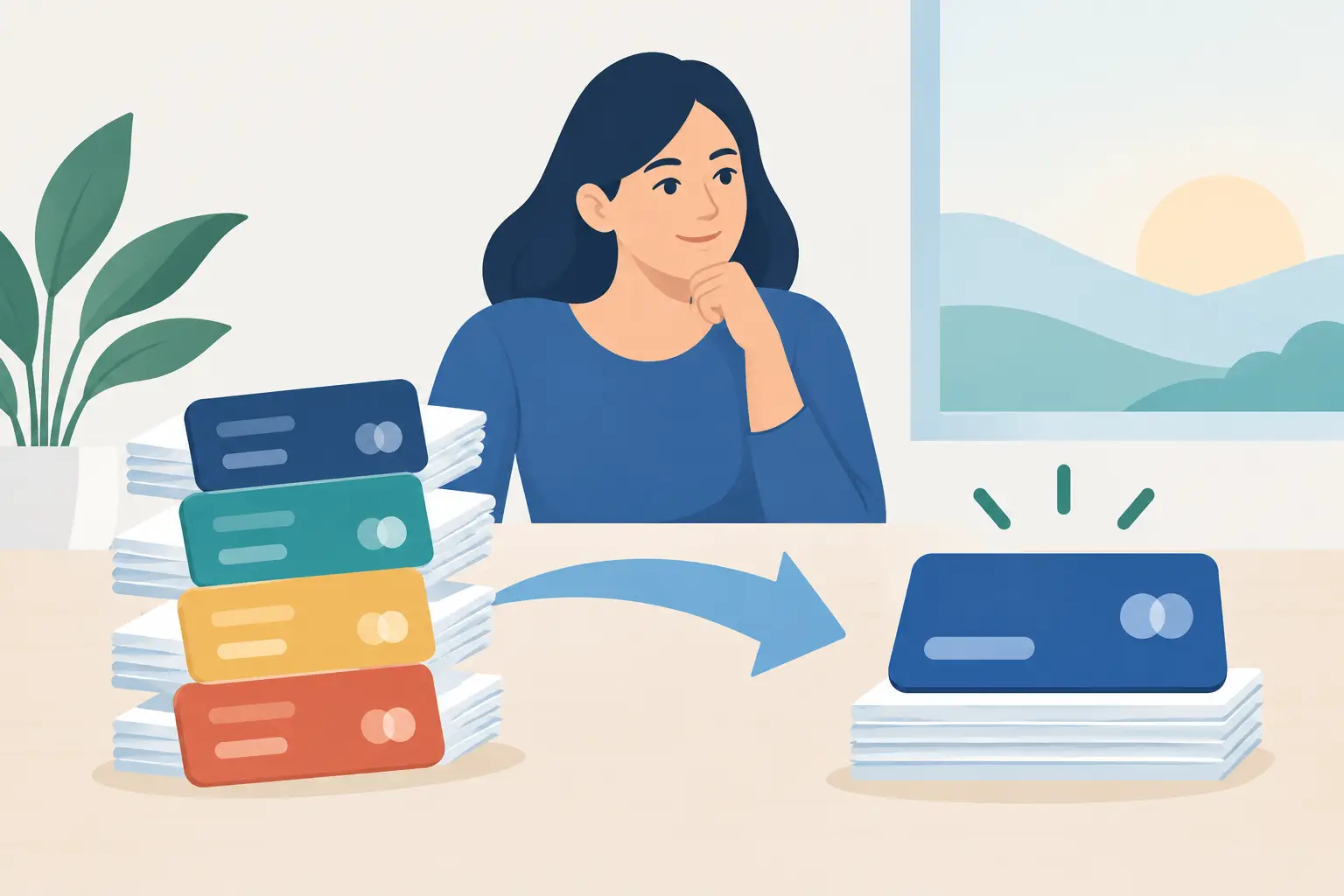
When several payment dates, interest rates, and balances compete for your attention, the problem is not only the amount you owe. It is the pressure of keeping everything straight. Learning how to consolidate debt can turn multiple unsecured debts into one organized repayment plan, but it only helps when the new arrangement is genuinely more affordable and fits your household budget.
For Canadians balancing a credit card, line of credit, personal loan, or unexpected family expense, consolidation can create breathing room. It does not erase debt, and it is not the right answer in every situation. Used carefully, though, it can reduce interest costs, simplify monthly cash flow, and give you a clearer path toward financial stability.
What debt consolidation actually does
Debt consolidation means replacing two or more eligible debts with one new borrowing arrangement. Instead of making separate payments to several creditors, you make one payment to the lender or provider that paid off, or took over, those balances.
The goal is usually to secure a lower interest rate, a predictable payment, or both. Credit cards are often a focus because their interest charges can be high. Moving a credit card balance into a lower-rate installment loan may mean more of each payment goes toward the principal rather than interest.
Consolidation is different from simply moving debt around. If you transfer balances to a new account but continue adding new charges to the paid-off cards, your total debt can grow quickly. The plan works best when it is paired with a realistic spending plan and a clear commitment not to rebuild the balances.
How to consolidate debt: start with the full picture
Before comparing loans or promotional offers, list every debt you want to address. Include the current balance, interest rate, minimum payment, payment due date, and whether the debt is secured or unsecured. Also note any prepayment penalties or fees.
Then calculate what you are paying each month in total. A lower monthly payment may feel like immediate relief, but it can cost more overall if the new loan extends repayment for many extra years. Compare the total cost of borrowing, not just the payment amount.
For example, consolidating $15,000 of credit card debt into a three-year loan can be helpful if the loan rate is meaningfully lower and the payment fits your budget. Extending that same debt over a much longer term may lower the monthly payment, but more interest can accumulate over time. The better option depends on your cash flow, income stability, and ability to make extra payments.
Common ways Canadians consolidate debt
A debt consolidation loan is often the most straightforward option. It is a personal loan with a set interest rate and repayment term. If approved, the funds may be used to pay eligible balances, leaving you with one scheduled payment. This option can work well for someone with steady income and a credit profile that qualifies for a rate below their existing debt rates.
A line of credit can offer flexibility because you can borrow, repay, and borrow again up to an approved limit. However, that flexibility can make it easier to delay repayment. A line of credit is most useful when you establish a disciplined payment amount that goes beyond interest charges and avoid treating available room as new spending money.
A balance transfer card may provide a temporary low or zero promotional interest rate on transferred credit card balances. Read the terms closely. Promotional periods end, transfer fees may apply, and missed payments can affect the offer. This route is best for debt you can realistically repay before the promotional rate expires.
Homeowners may consider borrowing secured by home equity. Because the loan is secured, rates may be lower than unsecured credit. The trade-off is serious: your home becomes part of the risk. Using home equity to manage consumer debt should be considered carefully, particularly if income is uncertain or the underlying spending issue has not been addressed.
For some people, a debt management plan through a reputable credit counseling organization may be more appropriate than a new loan. These plans can sometimes help organize repayment and reduce or stop certain interest charges, depending on creditor participation. When debt is no longer manageable, licensed insolvency professionals can explain formal options such as a consumer proposal or bankruptcy. Those choices can have long-term credit and legal implications, so informed, independent advice matters.
Compare the numbers, not the promises
The best consolidation option is rarely the one with the most appealing advertisement. Ask for the annual interest rate, all fees, the exact term, the monthly payment, and the total amount you will repay. Confirm whether the rate is fixed or variable and whether you can make additional payments without penalty.
Be cautious with providers that guarantee approval, pressure you to act immediately, or request upfront fees before explaining the terms. Legitimate financial support should leave room for questions and give you a clear explanation of your obligations.
Your credit score may affect the rate and terms you receive. Applying for several loans in a short period can also result in multiple credit inquiries, depending on the lender and credit bureau. Rather than applying broadly without a plan, compare eligibility requirements and seek guidance on options that match your situation.
Build a repayment plan that lasts
Consolidation is a financial tool, not a complete financial reset. Once your debts are combined, set up automatic payments for the new due date and keep a small buffer in your checking account where possible. Missing a payment can trigger fees, harm your credit, and undermine the savings you hoped to gain.
Next, identify what created the debt. It may have come from a job interruption, medical or family needs, higher living costs, education expenses, a business cash-flow gap, or simply relying on credit during a difficult period. The cause matters because the solution should address it.
If expenses regularly exceed income, a consolidation loan alone may only postpone the problem. Review recurring bills, subscriptions, insurance costs, tax obligations, and major upcoming expenses. For business owners, keep personal and business spending separate and use accurate bookkeeping to see whether the business is drawing more cash than it generates.
Create a modest emergency fund while you repay, even if you begin with a small automatic amount. Without some savings, the next repair, travel need, or unexpected bill can send you back to high-interest credit. Progress does not require perfection. It requires a plan that can withstand real life.
When consolidation may not be the best choice
Consolidation may not help if the new interest rate is similar to or higher than what you already pay, the fees erase the savings, or the repayment term is too long. It can also be a poor fit if your income is unstable enough that you cannot reliably make the required payment.
Take extra care before converting unsecured debt into debt secured by your home or other essential asset. Lower interest may be attractive, but the consequences of missed payments are greater. Similarly, do not close every old credit account automatically after consolidation. Closing accounts can affect your available credit and credit utilization. Consider your spending habits first, and keep only the accounts you can manage responsibly.
If collection calls, missed payments, or rising balances are already making it hard to cope, seek qualified support promptly. Waiting can reduce your choices and increase stress. A licensed professional can help you understand lending options, your credit position, and alternatives that may better protect your long-term finances.
Unity Financial Services can help connect Canadians with appropriate financial professionals as they compare lending, tax, budgeting, and protection needs. The right conversation should be centered on your full financial picture, not just the debt balance in front of you.
A good consolidation plan should leave you with more than one payment instead of many. It should leave you with a payment you understand, a budget you can maintain, and a realistic chance to move forward with confidence.